


Get the Facts
Whether you’re a REALTOR®, brokerage leader, MLS executive, homebuyer, or home seller, the resources here provide the facts and latest news on NAR's policy updates.
I am a Homebuyer or SellerNAR Reaches Settlement Agreement To Resolve Nationwide Homebuyer Claims in Tuccori v. At World Properties
LATEST POLICY RESOURCES
MLS Policy Updates


Considerations for “Coming Soon” Listings
These resources are intended to help MLSs, participants, and staff evaluate whether a listing marketed as “Coming Soon” complies with applicable MLS rules and NAR MLS policy.
Assessing “Coming Soon” Listings Checklist
Checklist to assist MLSs, participants, and staff evaluate whether a listing marketed as “Coming Soon” complies with applicable MLS rules and policy.
Things to Consider When Assessing Coming Soon Listings
Questions and answers to help evaluate whether a listing marketed as “Coming Soon” complies with applicable MLS rules and NAR MLS policy.
MLS Policy Risk Assessment PAG Recommendations
Multiple Listing Options for Sellers
Resources on NAR’s new MLS policy providing additional marketing choices for consumers while preserving equal access to property information on Multiple Listing Services.
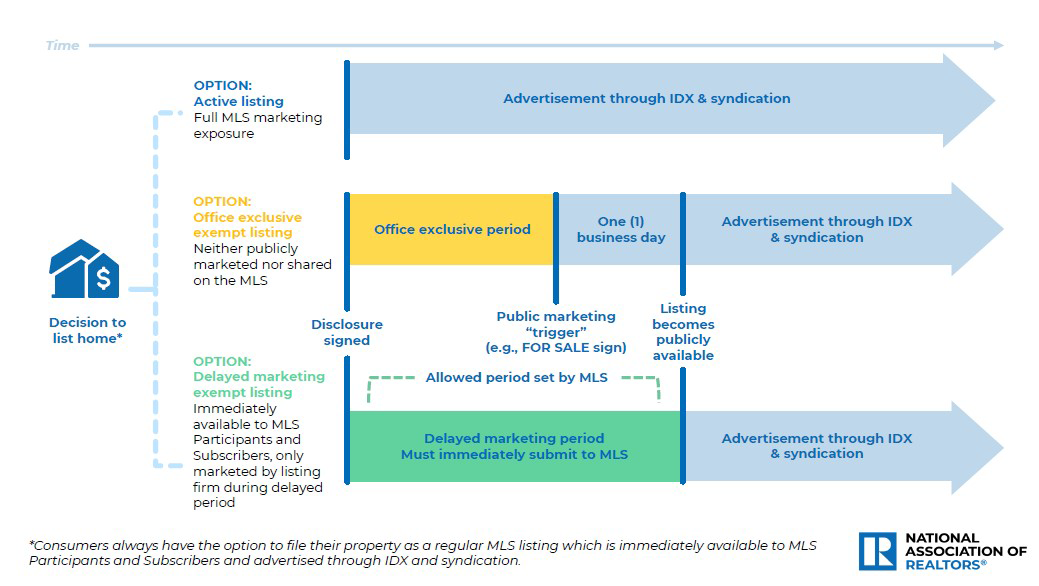
How a Delayed Marketing Listing Differs from Opting Out of IDX
A delayed marketing exempt listing might sound like opting out of the IDX feed, but the choices are very different. Find out how to determine which option might be best for your seller in this MLS Minute.
SITZER/BURNETT SETTLEMENT RESOURCES

Consumer Resources

I am a homebuyer
- What does the NAR settlement mean for me?
- How do the MLS policy changes impact me?
- What is a written buyer agreement?

I am a home seller
- What does the NAR settlement mean for me?
- When do the settlement practice changes go into effect?
- Do sellers still need to offer compensation to buyer brokers?
Consumer Guides
All of NAR’s one-page consumer guides are available as PDF or image downloads.
Additionally, you can also download a customizable PowerPoint or PDF version of all the guides,
enabling you to easily add a company logo, photo, and contact information.
PDF Instructionspdf
PPT Instructionspdf
Consumer Guide to Written Buyer Agreements
When searching for a home, you will be asked to sign a written buyer agreement after you’ve chosen the real estate professional you want to work with.
Consumer Guide to Open Houses and Written Agreements
Real estate professionals nationwide will require a written agreement prior to touring a home. But what if you are just attending an open house?
REALTORS®' Duty to Put Client Interests Above Their Own
NAR's Code of Ethics means that a REALTOR® cannot provide representation in a way that puts their own interests ahead of their clients' interests.
Consumer Guide: What Veterans Need To Know About Buying a Home
Veterans and active servicemembers often have unique needs when looking for a home. Find out how to address those needs before buying a home.
Consumer Guide: Offers of Compensation
As a home seller, you can choose to offer—or authorize your agent to offer—compensation to a buyer’s agent as a way to attract potential buyers.
Consumer Guide to Negotiating Written Buyer Agreements
Here's what to know about negotiating an agreement for services and compensation with an agent who is a REALTOR®.
Consumer Guide: Seller Concessions
Home sellers may choose to offer concessions to attract buyers or close a deal. Find out if this approach is right for you.
Consumer Guide: Multiple Listing Services (MLSs)
When you buy or sell a home, your real estate professional may use an MLS to find homes for sale or market your property. Here's what you need to know.
Consumer Guide: Fair Housing
Consumers and agents all have rights and responsibilities to promote a home buying or selling process free from discrimination.
Consumer Guide: Listing Agreements
One of the first things you'll do when selling your home is negotiate and sign a listing agreement with your agent. Here's what you need to know.
Consumer Guide: 10 Questions to Ask a Buyer's Agent
If you’re ready to buy a home, you should feel empowered to find and work with the agent who is the best fit for your needs.
Consumer Guide: 10 Questions to Ask a Seller's Agent
If you’re ready to sell your home, you should feel empowered to find and work with the agent who is the best fit for your needs.
Consumer Guide: Buying Your First Home
You’re ready to find your first home. Find out where to begin and what resources are available to you as you embark on your homeownership journey.
Consumer Guide: Mortgages and Financing
An agent who is a REALTOR® can help you learn about options for finding a loan that will help you pay for your new home over time.
Consumer Guide: Steps Between Signing and Closing
Once you sign a purchase agreement on your new home, there are still several steps to complete before you can finalize—or “close”—the transaction.
Consumer Guide: Agency and Non-Agency Relationships
When buying or selling a home, agency and non-agency relationships with real estate professionals vary by state law and offer different options.
Consumer Guide: The Appraisal Process
If you are financing your home purchase, you will likely be required to get a home appraisal as one of the steps between signing and close.
Consumer Guide: Home Inspections
Between signing and close, a buyer may have a home inspected to ensure it is in good condition and safe for a new owner. Here's what you should know.
Consumer Guide: Homeowners Insurance
Understanding homeowners insurance is essential for anyone looking to purchase a home—ask a REALTOR® to connect you with a licensed insurance agent.
Consumer Guide: Flood Insurance
A licensed insurance agent can advise you on purchasing the right flood insurance to protect your assets from the most common natural disaster.
Consumer Guide: Fire Damage and Policy Coverage
Most homeowners insurance policies cover fire damage. Some may limit coverage if your risk is higher. Find out how to understand your coverage.
Consumer Guide: Preparing to Sell Your Home
Here are common considerations as you prepare your home for listing and viewing by potential buyers. An agent who is a REALTOR® can guide you.
Consumer Guide: What Goes Into Pricing Your Home
An important question to ask your agent is how to determine your home's listing (asking) price. Here is what sellers should know about home pricing.
Consumer Guide: Escrow and Earnest Money
Between signing and closing, homebuyers typically deposit money into an escrow account. A REALTOR® can advise you on how to keep your deposits safe.
Consumer Guide: Preparing for Homeownership
Whether you are a first-time buyer or planning your next move, here's what prospective buyers should know to prepare for the home purchase process.
Consumer Guide: Property Taxes
Property taxes are a reality of homeownership. An agent who is a REALTOR® can help connect you with a tax expert in your area, but here are the basics.
Consumer Guide: Seller Disclosures
Home sellers must disclose certain characteristics of the property to buyers. A REALTOR® can help you understand why and what you need to disclose.
Consumer Guide: Marketing Your Home
Once you decide to sell your home, your agent will work with you to determine the best strategy to reach potential buyers and attract strong offers.
Consumer Guide: Homeowners Associations
In many housing markets, HOAs and other community associations can be part of the homebuying (and owning) experience. Here’s what buyers should know.
Consumer Guide: Navigating Multiple Offers
When your home is on the market, you may receive offers from multiple interested buyers. Here's how to determine which one is best for you.
Consumer Guide: Alternative Listing Options
An agent who is a REALTOR® can help home sellers craft a marketing strategy that best suits their needs and preferences.
Consumer Guide: Deeds and Titles
To complete a home sale, a home's ownership rights are formally transferred from the seller to the buyer. Here's what to know about deeds and titles.
Consumer Guide: Buying Land and Building a New Home
Prospective homebuyers may consider purchasing a plot of land or a new construction project instead of an existing home. Here's what you should know.
Consumer Guide: Protecting Yourself From Title Fraud
Here's what to know about how this serious crime happens, who's at risk, and how to prevent losing the title to your property.
Consumer Guide: Overcoming Barriers to Homeownership
Whether you're saving for a down payment, managing debt, or dealing with other barriers to entry, REALTORS® can help you find your dream home.
Consumer Guide: Mortgage Interest Tax Deduction
If you're navigating tax season or planning to buy a home, understanding how this deduction works can help you make smarter financial decisions.
Consumer Guide: Your Home and Estate Planning
A home is a long-term financial asset. Estate planning helps you decide what happens to your home and other assets if you can no longer care for them.
Consumer Guide: Buyer's vs. Seller's Market
Recognizing whether shifting market conditions favor buyers or sellers can help you make more confident decisions. Learn what each means for you.
Consumer Guide: Assistance Programs
Buying or keeping a home can be financially challenging—but you may not have to do it alone. There are assistance programs designed to help.
Consumer Guide: Real Estate Auctions
Buying a home at auction can be an exciting opportunity. First-time buyer and experienced investors should be aware of the rules and risks.
Consumer Guide: Working With a Real Estate Attorney
Buying a home is an important decision. Many professionals are available to help you throughout the process, including a real estate attorney.
Consumer Guide: Making Your Home More Energy Efficient
Whether you’re looking to lower utility bills, preparing to sell, or modernizing your home, here’s how to get started and what to keep in mind.
Consumer Guide: Buying a Historic Property
From architectural character to lasting craftsmanship, historic homes offer one-of-a-kind charm, but they also come with unique responsibilities.
Consumer Guide: State and Local Tax (SALT) Deductions
Homeownership has always had its perks when it comes to tax deductions, but the latest tax reform helps homeowners save even more money. Here’s why.
Consumer Guide: 10 Tips for Packing Smartly for a Move
Buying or selling a home is exciting—but packing and moving can be daunting. Proper planning and a solid strategy from these 10 tips can ease the task.
Consumer Guide: What is the VA Home Loan Guaranty?
For those who’ve completed military service or are actively serving our country, the VA Home Loan Guaranty offers a path to homeownership.
Consumer Guide: Do You Need Private Mortgage Insurance?
When buying a home for the first time, there are plenty of new terms to learn. One that can cause confusion is private mortgage insurance, or PMI.
Consumer Guide: Home Selling Tips for Privacy and Safety
An agent who is a REALTOR® can help you ensure privacy and security by managing access during the marketing and transaction process.
Consumer Guide: How to Protect Against Real Estate Wire Fraud
Buying a home is an exciting milestone. Work with a real estate professional who is a REALTOR® to keep your investment safe from potential wire fraud attempts.
Consumer Guide: Understanding Condo Ownership
Condos are typically more affordable than single-family homes and require less maintenance. Here’s a primer that will help you evaluate your options.
Consumer Guide: Real Estate Sales Contract Contingencies
Regardless of which side of a transaction you’re on, you need a clear understanding of any contingencies that are part of the real estate contract.
Consumer Guide: Hiring a Remodeling Contractor
Home-improvement project on the horizon? Learn how to find a remodeling contractor to ensure your project is easy and up to code.
Consumer Guide: 8 Tips for Selling Your Home in Winter
If you need to sell your home during winter, you can capitalize on certain advantages that seasonal selling provides.
Consumer Guide: Can't Pay Your Mortgage? You Have Options
Financial hardships can strike when we least expect them. Here are options to help you get back on track when it comes to managing your mortgage payments.
Consumer Guide: Make Your Home More Energy Efficient
If you're worried about energy costs, there are practical tips to make your home more energy efficient and lower costs.
Consumer Guide: Thinking of Selling? 7 Factors to Consider
You’ve thought about selling your home—but it’s a big step. These seven discussion questions can help you think through the decision.
Consumer Guide: Are You Ready to Invest in Real Estate?
If you’re considering buying an investment property such as a residential rental, commercial building or land, here are questions to help determine if you’re ready.
Consumer Guide: 15 Things to Do Before Every Showing
Here’s a handy checklist of the things to do before every showing to help your home sell faster and for top dollar.
Consumer Guide: Spotting Deepfake Scams in Real Estate
Among cybercrimes, the use of deepfake technology is a growing concern. Here’s what you need to know to protect yourself during the sale or purchase of your home.
Consumer Guide: Staging Your House for a Sale
In real estate, “home staging” refers to presenting your property in a way that highlights its strengths and helps buyers envision living there.
Consumer Guide: Financing a Renovation When You Buy
Don’t let the thought of renovation costs scare you away. There are mortgage options that let you fold in the cost of renovations or repairs.
Consumer Guide: Navigating Mortgage Interest Rate Shifts
Fluctuations in mortgage interest rates can be unsettling. Approaching the issue with knowledge can help keep your home purchase on track.
Consumer Guide: How Solar Impacts a Real Estate Transaction
If you’re considering buying a home with a solar installation, be aware of how certain factors influence solar performance.
Consumer Guide: Overcoming Roadblocks to a Sale or Purchase
Deals can fall through for any number of reasons. Prepare yourself for the most common potential pitfalls so your transaction closes smoothly.
Consumer Guide: 10 Tips for Unpacking Smartly After a Move
If you're surrounded by boxes and feeling a little overwhelmed, these tips can help make the unpacking process go more smoothly.
Consumer Guide: Needs vs. Wants in a Home Purchase
It’s not unusual to go into the homebuying process with a priority list that needs to be whittled down once you see what’s available on the market. Use this checklist to refine what’s most important to you.
Consumer Guide: Seller Handoff Checklist
Seller handoff checklist with documents, keys, codes, warranties, and home details to help new owners transition.
Consumer Guide: Condominium Insurance
Buying a condominium often means navigating two insurance policies. Understanding how these policies work together can help you avoid coverage gaps.
Consumer Guide: Prepare Your Home for Hurricane Season
The best course of action is to prepare as much as possible before a hurricane hits. Here are important steps to protect yourself and your home.
Consumer Guide: Helping Family Members Become Homeowners
If you are contemplating providing financial support to your children or other family members, here are helpful facts and guidelines to bear in mind.
Consumer Guide: Fraud Red Flags
Scams can occur at any stage of a transaction. If something doesn’t seem right, this guide will help you understand the risks and appropriate action.
Consumer Guide: Buyer Safety While Viewing Homes
Follow these practical tips to stay safe during your homebuying process.
Additional Consumer Information
Real Estate Practice Changes and Impact on the ConsumerinfographicAugust 17, 2024
Infographic: See how NAR’s proposed settlement and changes, which took effect on August 17, impact home buyers and sellers.
What the NAR Settlement Means for Buyers & Sellers
The settlement includes changes to real estate transactions, but importantly, consumers will continue to have choices regarding real estate services.
Homebuyers: What the NAR Settlement Means for You
REALTORS® are a trusted source of advice and stand ready to help you navigate your homebuying journey and make the choices that work best for you.
Home Sellers: What the NAR Settlement Means for You
REALTORS® are a trusted source of advice and stand ready to help you navigate the complex home selling process with choices that work best for you.


Member Resources
Dos and Don’ts When Working With Buyers
Guidance on implementing new business practice changes in your transactions with homebuyers.
Dos and Don’ts When Working With Sellers
Guidance on implementing new business practice changes in your transactions with homesellers.
Written Buyer Agreements 101
Outlining the services an MLS Participant will provide and how they will be compensated.
MLS Policy Changes Summarypdf
Details of changes to MLS policies and model MLS governing documents.
Handbook on Multiple Listing Policy
Guide for REALTOR® associations operating multiple listing services.
Settlement Agreementpdf
Full documentation of the settlement. (PDF)
Final Settlement Approval Orderpdf
Full documentation of the settlement approval order. (PDF)
Navigating the Practice Changes Webinar
Watch a recording of an all-member webinar that reviews the practice changes that took effect on August 17 and discusses where to direct consumers for answers about the settlement class notice.
Document