


The spring housing market is off to a slower-than-expected start, with home sales dipping in March after a brief uptick in February. A shortage of homes for sale may be sidelining buyers, many of whom could be waiting for more choices and clearer signs of economic improvement before making a move into the market.
Existing-home sales—including single-family homes, townhomes, condos and co-ops—fell 3.6% in March compared to February and are below last year’s pace, down 1% annually, the National Association of REALTORS® reported Monday.
“Lower consumer confidence and softer job growth continue to hold back buyers,” says Lawrence Yun, NAR’s chief economist. Plus, “inventory remains a major constraint on the market. The inventory-to-sales ratio, or supply-to-demand ratio, is below historical norms.”
Yun says that an additional 300,000 to 500,000 homes for sale would help bring the housing market closer to normal conditions “and allow consumers to make purchase decisions without feeling rushed.” Despite last month’s slower sales pace, homes listed tended to receive an average of 2.2 offers, and about 18% of homes sold above list price, according to the March 2026 REALTORS® Confidence Index Survey.
Home Prices Remain Resilient
As inventories stay tight, the pressure on home prices continues. The median home price rose to a record high for the month of March—reaching $408,800, NAR reports.
The higher home prices have been a boon to current homeowners. “That price growth has helped the typical homeowner accumulate $128,100 in housing wealth over the past six years,” Yun says.
Challenges and Opportunities Lurk in 2026’s Housing Market
NAR recently revised its 2026 housing forecast, now projecting existing-home sales to see a more modest 4% increase this year, mostly due to higher mortgage rates than originally expected. Also, NAR projects that new-home sales will remain mostly flat this year. NAR’s forecast continues to project median home prices to rise 4% in 2026.
“Mortgage rates have been rising, and that has led us to trim our home sales outlook for the year,” Yun says. “Even with a more modest pace of sales growth, home prices continue to steadily increase due to minimal inventory growth.”
More opportunities have emerged in some locales for home buyers, even as home prices have remained elevated. Leveraging equity gains from a previous sale, buyers paying all cash continue to remain high, comprising 27% of existing-home sales transactions last month. At the same time, first-time home buyers are finding openings and stepping into the market, making up 32% of existing-home sales in March, NAR’s data shows.
In some markets, buyers are finding more negotiating power. Todd Luong, a real estate pro with RE/MAX DFW Associates in Frisco, Texas, recently told Real Estate Today that he’s seeing sellers be more flexible: “We’re seeing more sellers open up to offering concessions, including help with rate buydowns, repair credits or decorating allowances that buyers can use however they choose,” he says.
“That kind of flexibility wasn’t common” in recent years. Still, higher home prices—along with rising costs for insurance and property taxes—are causing buyers to move more cautiously, Luong adds.
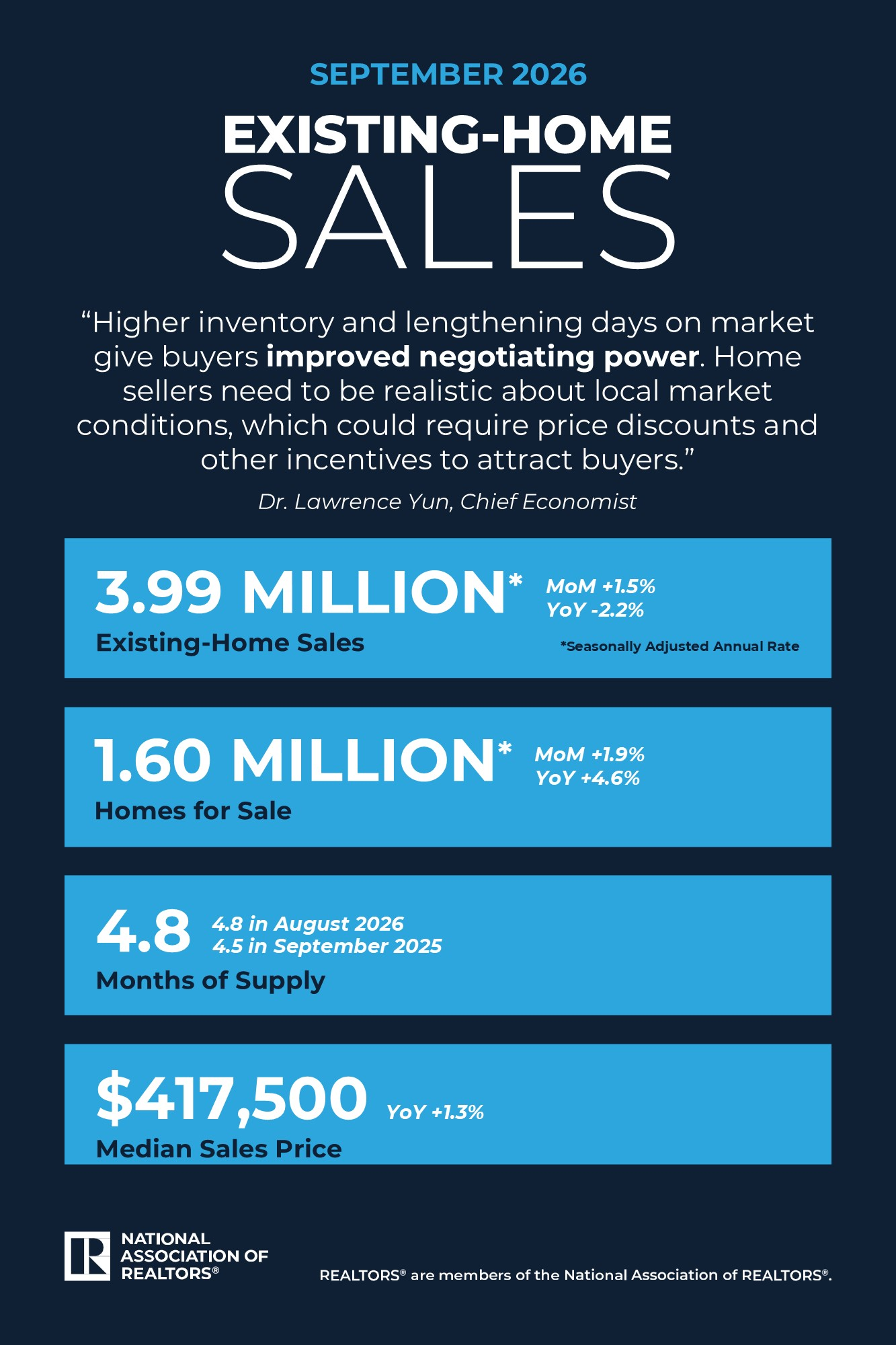
Regional Snapshot With Home Sales
Sales were lower in March across all four major regions of the country, led by the sharpest decrease in the Northeast. Meanwhile, home prices were up across the board, led by a nearly 6% annual gain in the Northeast, NAR’s data shows. Here’s a closer look at how existing-home sales fared nationwide in March:
- Northeast: Sales fell 8.5% in March compared to February, reaching an annual rate of 430,000. Sales were down 12.2% from a year ago. Median price: $494,500, up 5.7% from a year earlier.
- Midwest: Sales decreased 4.2% in March month-over-month to an annual rate of 920,000. Sales are also down by 3.2% compared to a year ago. Median price: $315,500, up 4.9% from March 2025.
- South: Sales dropped 3.1% month-over-month to an annual rate of 1.86 million. Sales, however, are up 2.2% year-over-year. Median price: $362,600, up slightly by 0.8% from March 2025.
- West: Existing-home sales fell 1.3% month-over-month to an annual rate of 770,000. Still, sales remain up 1.3% year-over-year. Median price: $613,400, down 1.3% from March 2025.
