


Contract signings for home sales climbed slightly in February as buyers emerged amid lower mortgage rates and moderating home prices. But challenges remain heading into the spring, says Lawrence Yun, chief economist at the National Association of REALTORS®.
In February, NAR’s Pending Home Sales Index—a gauge of future home closings based on signed contracts—rose 1.8% from January. Compared to a year ago, pending home sales are down slightly by 0.8%, NAR reported Tuesday.
“The slight [monthly] gain in pending contracts appears to be driven by improved affordability conditions,” Yun says. “However, those conditions could reverse if higher oil prices lead to an uptick in mortgage rates.”
Home buyers have shown over recent months they’re sensitive to any fluctuations in mortgage rates, and mortgage rate volatility is growing amid the conflict with Iran. About two weeks ago, mortgage rates dipped below 6%—the lowest rates in more than three years—before quickly bouncing back up as the conflict began. The 30-year fixed-rate mortgage rose to a 6.11% average last week, Freddie Mac reported. Global tensions also are pushing gas prices higher and renewing concerns about inflation.
Housing Affordability Is Improving
Despite the uptick, mortgage rates remain lower than a year ago, amounting to roughly $113 less for the average monthly mortgage payment at today’s rates. NAR REALTOR® News’ latest report on mortgage rates examined the real difference in mortgage rates: 6.11% versus 5.98%.
NAR’s Housing Affordability Index has shown notable improvement across the country. Wage growth has been outpacing home price increases by nearly 4 percentage points. More homes for sale are putting less pressure on home prices: The median existing-home price was $398,000 in February, up just 0.3% from a year earlier. Also, some sellers are reportedly making price adjustments to win more buyer attention this winter, with fewer homes selling above asking price in February—14% versus 21% a year earlier.
Related: Measuring Housing Affordability: Is That Home Really Affordable?
First-time buyers gradually are re-entering the housing market, comprising 34% of existing-home sales in February, NAR’s data shows.
“For first-time home buyers, purchasing a home is not a snap decision,” Yun says. “It takes time to build credit, save for a down payment and fulfill existing rental lease agreements. Still, there is a sizable pent-up demand that could be released into the market. Although job gains have been sluggish in recent months, there are still 6 million more jobs in the country than in the pre-COVID period.”
Regional Fluctuations Grow
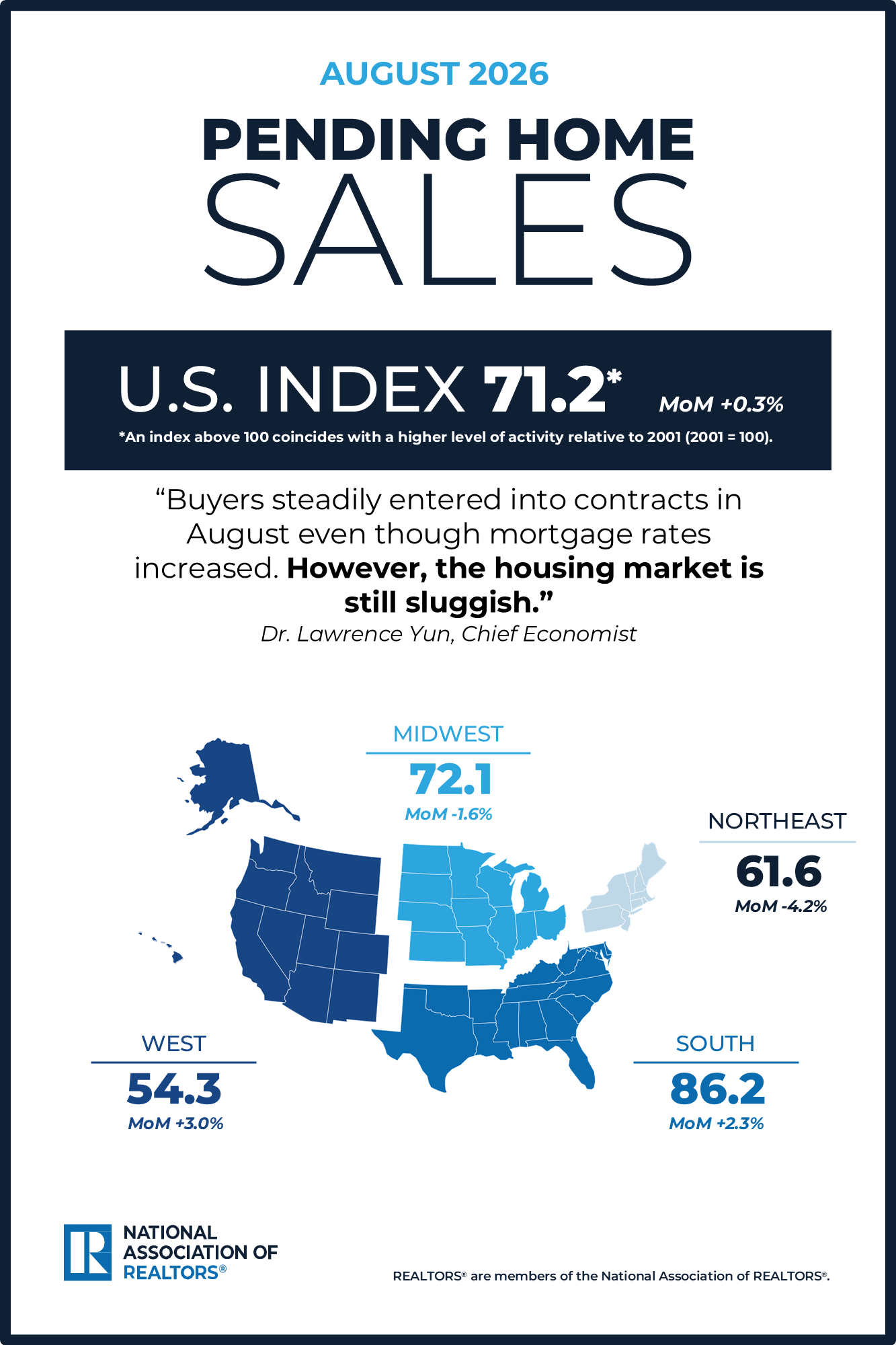
“The Midwest—the most affordable region in the country—was the strongest performer in February” with contract signings, Yun says. Pending home sales in the Midwest climbed nearly 5% in February compared to January, followed by a 2.7% monthly uptick in the South and a more modest 0.9% increase in the West.
The Northeast was the only major region to see contract signings fall last month, down by 3.6% month-over-month and a 12% decline compared to a year ago.
“The Northeast was held back by a combination of higher home prices and a shortage of supply,” Yun says. The existing-home sales price rose 3.3% annually in the Northeast, reaching a median of $479,800 in February.
10 Markets Posting Largest Gains in Contract Signings
According to Realtor.com® Economics, the following 10 markets saw the biggest annual gains in pending home sales in February:
- San Diego–Chula Vista–Carlsbad, Calif.: +13.5%
- Jacksonville, Fla.: +12.1%
- San Jose–Sunnyvale–Santa Clara, Calif.: +10.6%
- Denver–Aurora–Centennial, Colo.: +10.5%
- Miami–Fort Lauderdale–West Palm Beach, Fla.: +10%
- Phoenix–Mesa–Chandler, Ariz.: +9.8%
- Sacramento–Roseville–Folsom, Calif.: +9.3%
- Kansas City, Mo.-Kan.: +8.7%
- Austin–Round Rock–San Marcos, Texas: +8.1%
- Oklahoma City, Okla.: +7.4%
