Economic momentum softened in February. The labor market weakened further, with job declines compared to the previous month. Inflation held at 2.4%, with shelter costs still driving pressures, though easing rent trends suggest potential easing ahead. After cutting rates late last year, the Federal Reserve has kept policy unchanged, while long-term yields remain above 4 percent, keeping financial conditions relatively tight. At the same time, economic growth slowed in the fourth quarter of 2025, indicating a loss of momentum heading into year-end.
Below is a summary of the performance of each major commercial real estate sector in February of 2026.
Office Properties
The office market continued to stabilize gradually in February, with demand trends improving from prior lows even as overall conditions remain fragile. Vacancy stayed elevated, and concessions remain widespread, limiting effective rent gains despite a modest improvement in pricing. Class A led leasing activity while still carrying the highest vacancy, Class B experienced deeper demand softness but maintained comparatively healthier fundamentals, and Class C continued to lose tenants while retaining the tightest vacancy and relatively stronger rent performance among the tiers.
Multifamily Properties
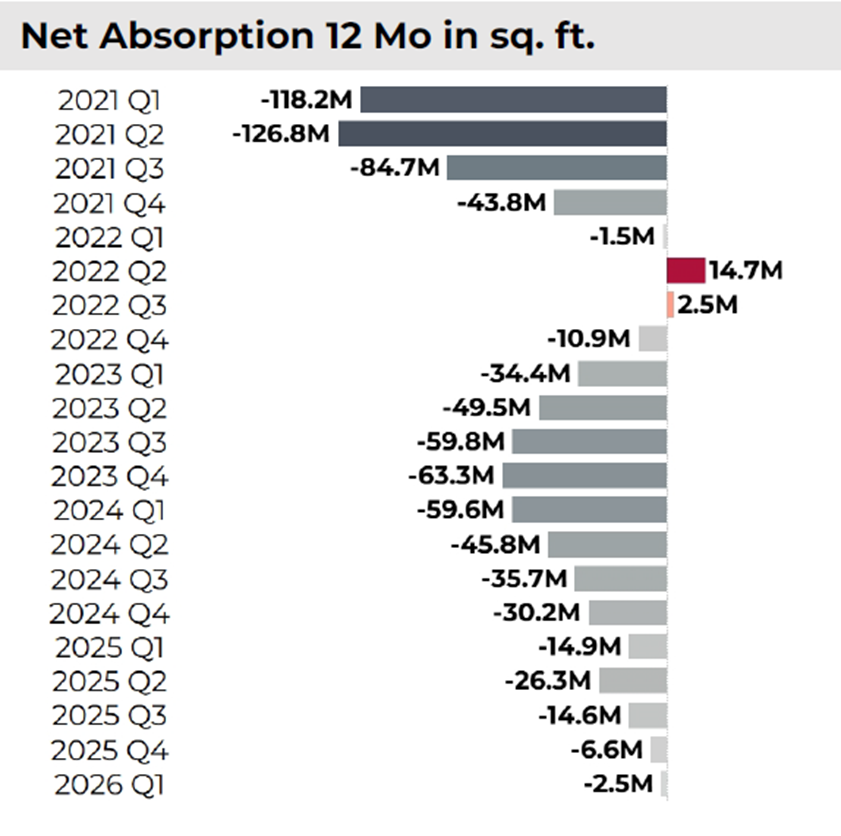
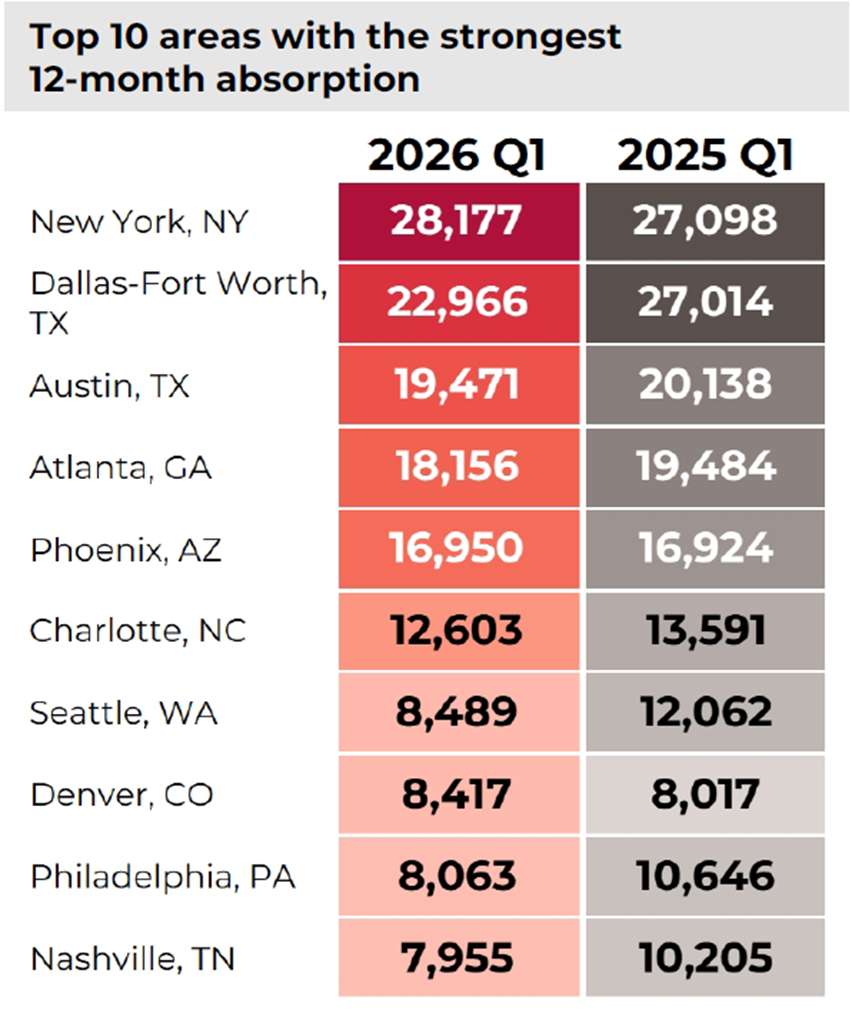
The multifamily market continues to reflect steady demand, though elevated supply from prior development cycles is still weighing on fundamentals, keeping vacancy elevated and rent growth subdued. Absorption has moderated from last year but remains relatively strong by historical standards, while deliveries continue to outpace demand, prolonging the supply imbalance. Conditions have softened across Class A and B properties with limited pricing power, while Class C maintains comparatively stronger rent performance despite ongoing tenant turnover. Demand remains concentrated in large urban markets, even as oversupplied Sun Belt metros continue to face pressure, leaving the recovery uneven across regions.
Retail Properties
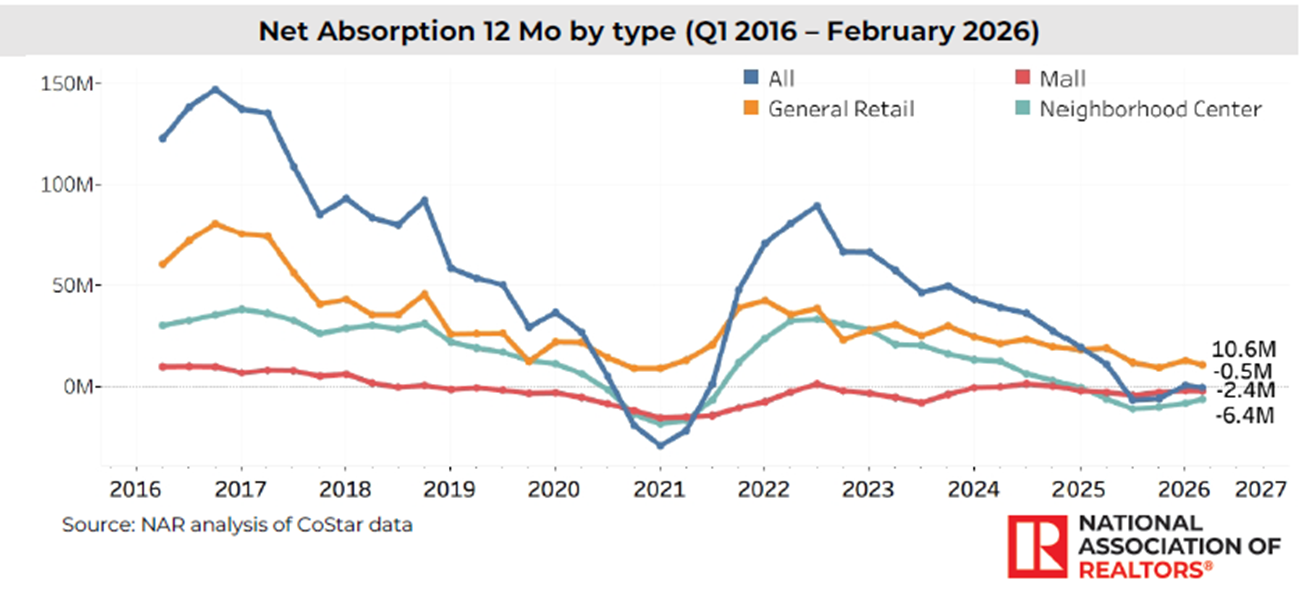
Retail remains the tightest sector in commercial real estate. Demand remains slightly negative and new supply is adding modest pressure, but vacancy rates are still relatively low, At the same time, rent growth continues to outperform other property types, helping maintain pricing power. General retail stands out as the most resilient segment, with the lowest vacancy, while neighborhood centers and malls face weaker demand despite selective rent strength in certain formats.
Industrial Properties
Industrial fundamentals continue to moderate following the sector’s peak, with demand slowing while new supply keeps vacancy elevated and rent growth restrained. Completions still exceed leasing activity, leaving the supply-demand imbalance largely unchanged and the market in an ongoing normalization phase. Logistics properties remain the primary driver of demand, specialized facilities show selective strength, and flex space continues to face weaker conditions. Rent gains have cooled unevenly across segments, reflecting a market that is stabilizing but not yet fully rebalanced.
Hotel Properties
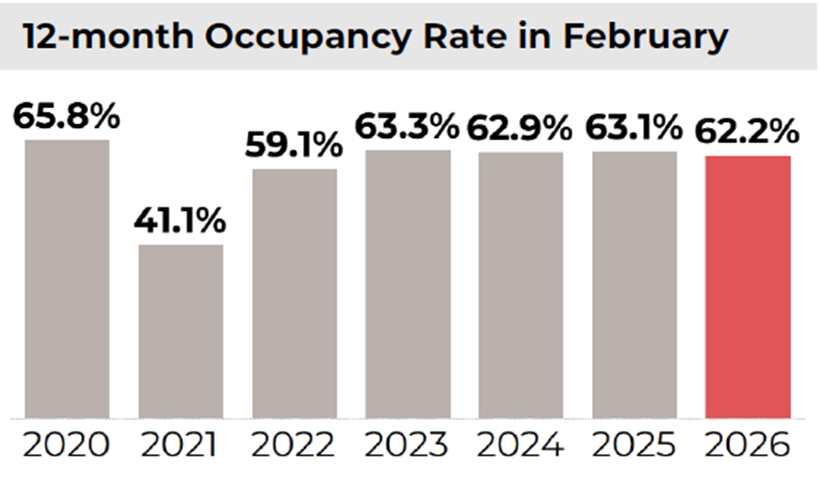
Hospitality performance remained stable in February 2026, with occupancy at 62.2%, still roughly 4% below pre-pandemic levels but also a percentage lower than previous years as remote work and softer corporate travel continue to weigh on major business markets. Even so, revenue fundamentals strengthened, with both ADR and RevPAR standing well above 2019 benchmarks and supporting healthy profitability. Investment activity cooled, however, as elevated borrowing costs and ongoing economic uncertainty tempered investor appetite.