Labor market conditions continued to weaken toward the end of 2025, as hiring slowed and revised data showed weaker job growth than previously reported. In response to these conditions, the Federal Reserve shifted toward policy easing, delivering multiple rate cuts at the second half of 2025. Inflation showed signs of easing, while overall economic growth remained resilient, supported by steady consumer spending. Financial conditions, however, have been slower to adjust, with borrowing costs only beginning to edge lower. As a result, the full benefits of monetary easing for investment and commercial real estate activity are likely to emerge gradually in the year ahead.
Office markets showed gradual stabilization, with demand improving from last year’s lows but vacancy still elevated and rent growth restrained by ongoing concessions. In multifamily, solid underlying demand contrasts with lingering oversupply, keeping vacancy high and rent growth at historically weak levels despite slowing construction. Retail conditions reflected cautious improvement, as demand recovered modestly and pricing remained comparatively strong, even while new supply and weaker segments weighed on the outlook. Across industrial properties, the cycle continued to cool, with excess supply pressuring vacancy and rents, though narrowing imbalances point to a slow move toward normalization.
Below is a summary of the performance of each major commercial real estate sector in December of 2025.
Office Properties
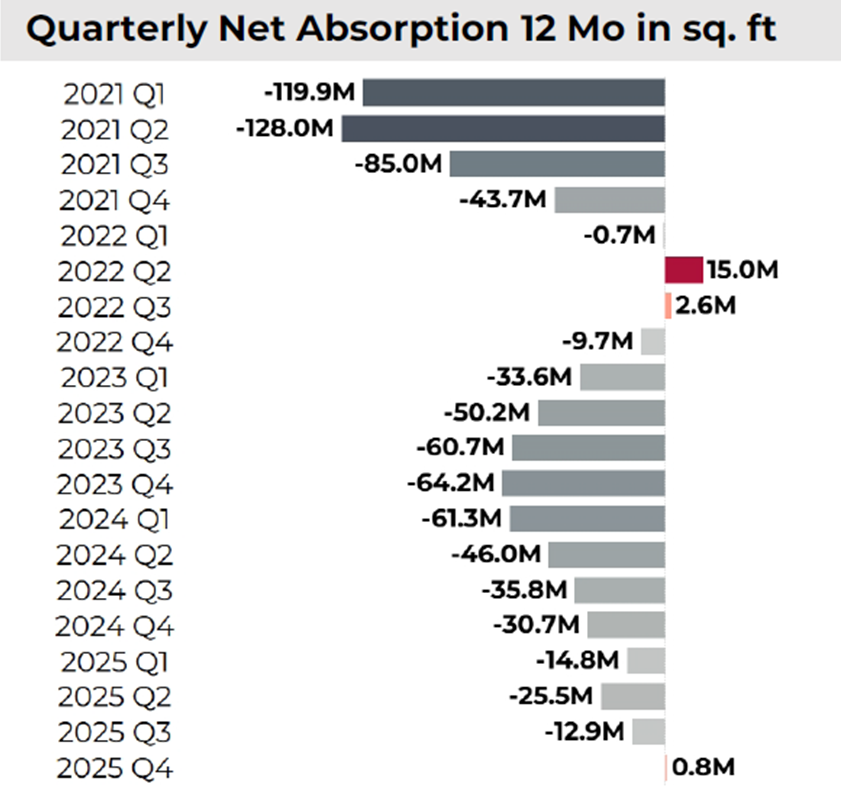
The office market showed early signs of stabilization in December, with demand finally turning slightly positive after a prolonged period of losses, even as overall conditions remain fragile. Vacancy edged higher, and rent growth softened, underscoring landlords’ continued reliance on concessions. Class A continued to anchor demand despite elevated vacancy, Class B showed steady improvement with relatively healthier fundamentals, and Class C remained under pressure but retained the lowest vacancy. Regionally, performance was uneven, with some large markets still losing tenants while others showed clear signs of improvement.
Multifamily Properties
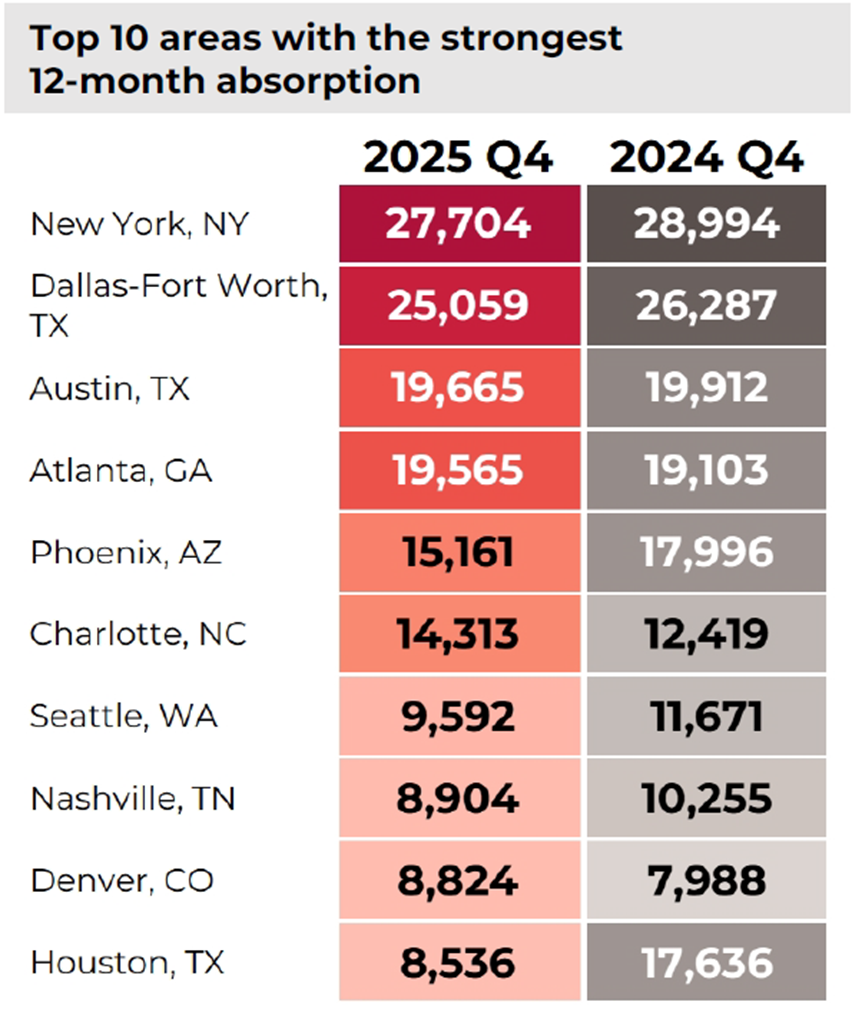
The multifamily market continues to show resilient demand, but excess supply from prior construction remains a drag on fundamentals, keeping vacancy elevated and rent growth muted. Absorption remains steady, though new deliveries continue to outpace demand, limiting pricing power as the sector moves through a softer leasing period. Class A and B conditions have cooled, while Class C continues to outperform on rents despite ongoing tenant turnover. Regionally, large urban markets remain more resilient, while oversupplied Sun Belt metros continue to face pressure.
Retail Properties
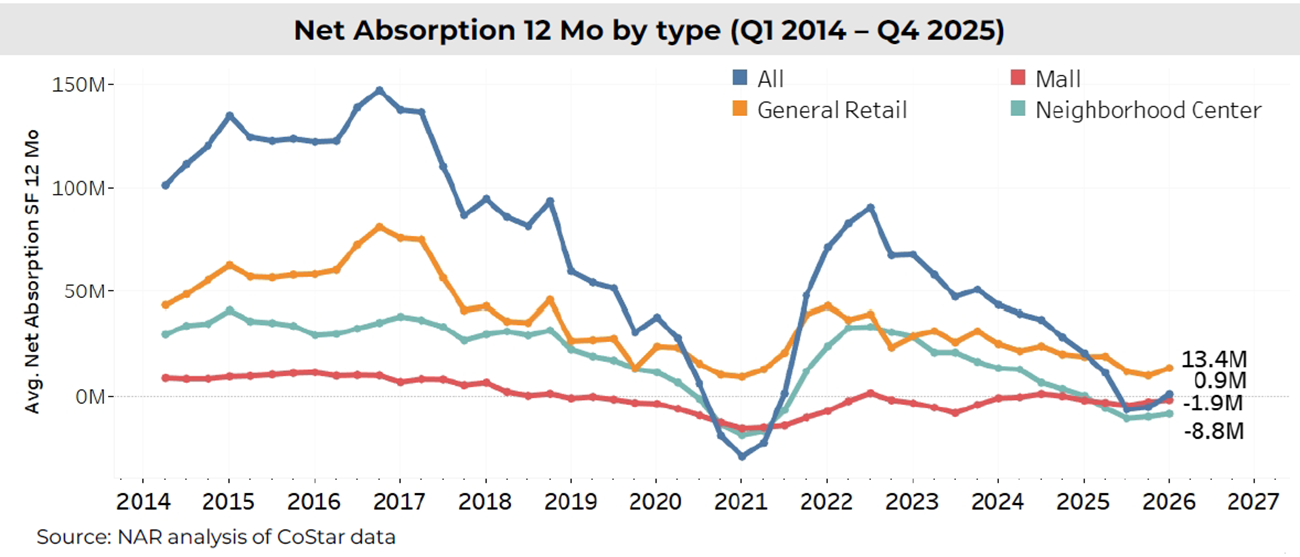
Retail showed tentative improvement toward the end of the year, with demand turning modestly positive and rent growth remaining the strongest among major property types, supported by low vacancy. That said, conditions remain fragile as new supply continues to enter the market faster than demand, keeping upward pressure on vacancy. Performance varies by segment, with general retail holding up best, while neighborhood and power centers face weaker absorption despite relatively strong rent growth.
Industrial Properties
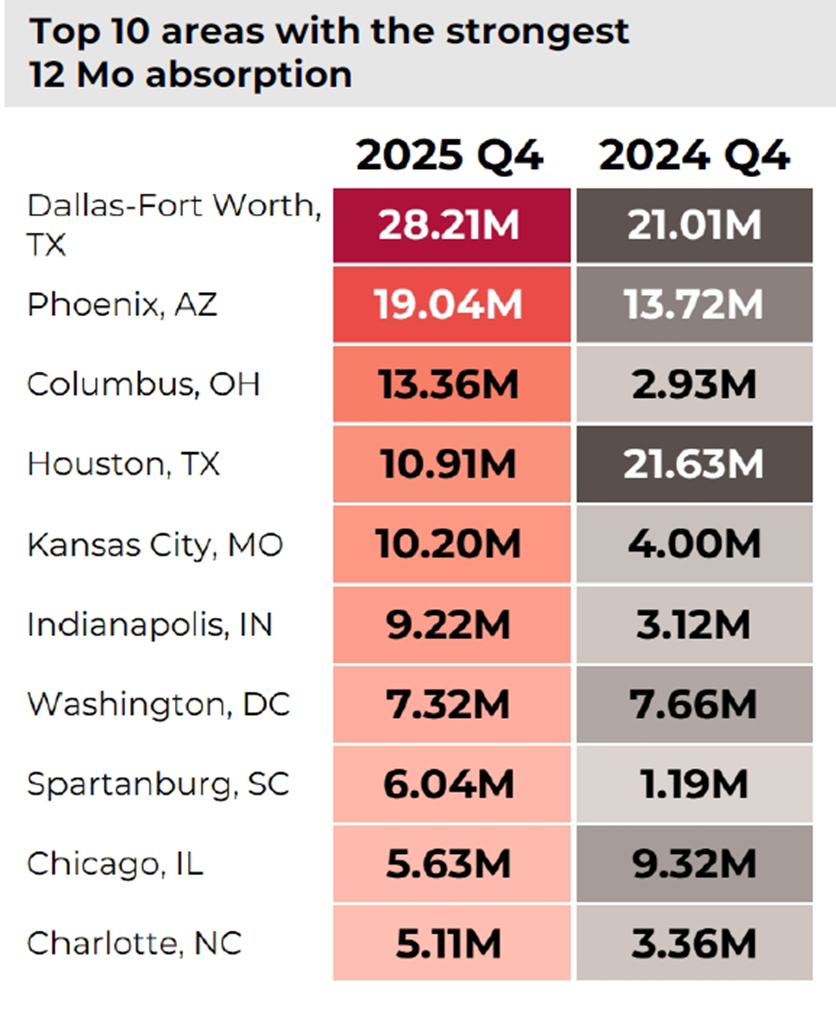
Conditions in the industrial market reflected a gradual rebalancing, with excess supply still present but pressures beginning to ease compared with earlier quarters. Vacancy moved higher, and rent growth slowed, reflecting a market still adjusting after several years of rapid expansion. While logistics properties continue to anchor demand and specialized facilities show pockets of growth, flex space remains under pressure. Even so, the pace of imbalance has begun to ease, suggesting the sector may be approaching a more stable phase as excess supply is gradually absorbed.
Hotel Properties
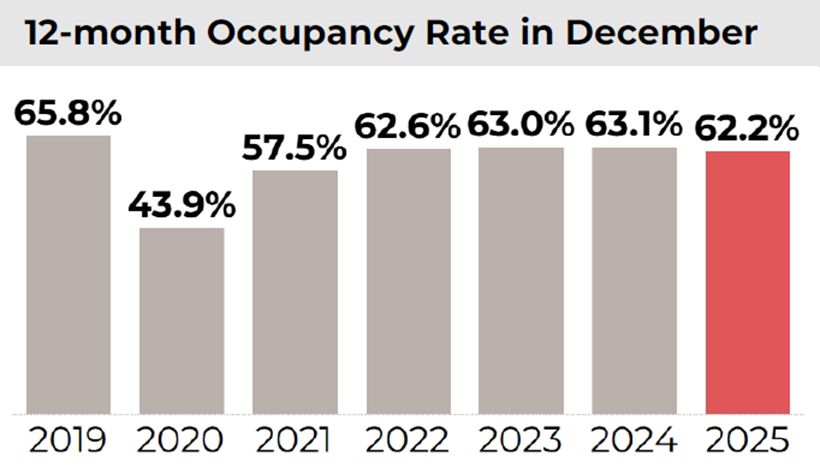
Hospitality performance remained stable in December 2025, with occupancy at 62.2%, still roughly 4% below pre-pandemic levels as remote work and softer corporate travel continue to weigh on major business markets. Even so, revenue fundamentals strengthened, with both ADR and RevPAR well above 2019 benchmarks, supporting healthy profitability. Investment activity cooled, however, as elevated borrowing costs and ongoing economic uncertainty tempered investor appetite.