









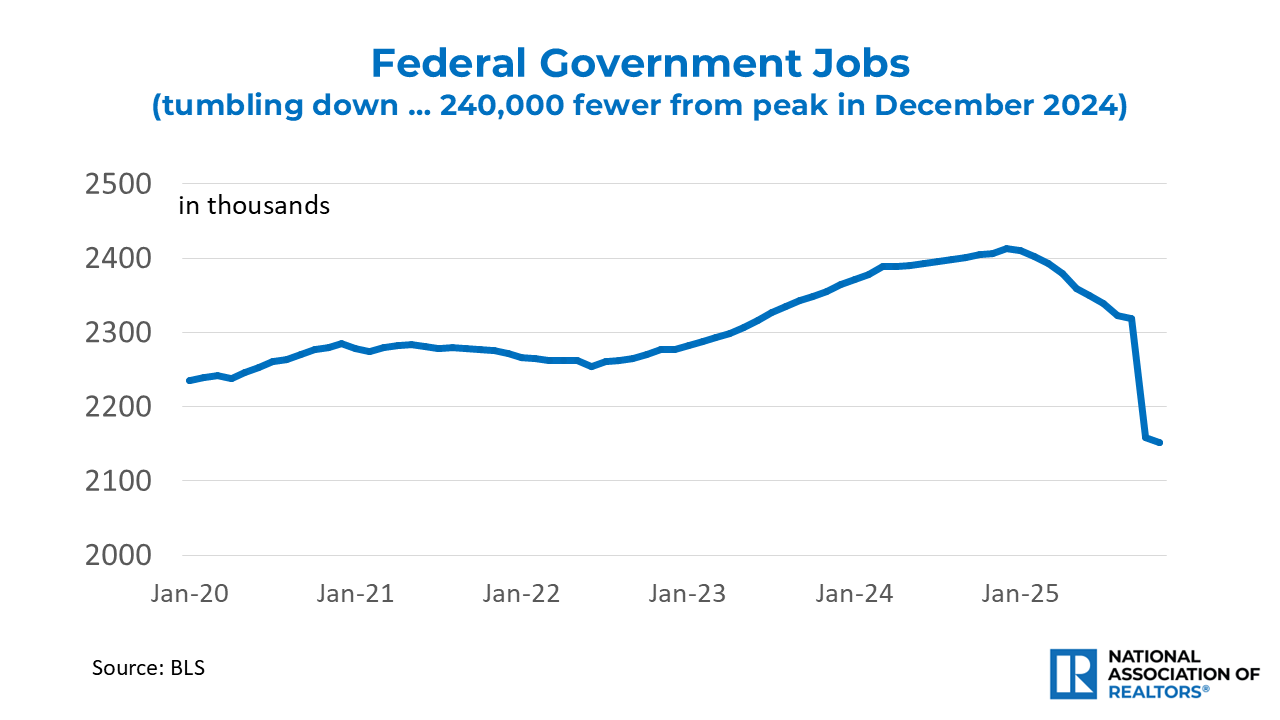
As of November, 240,000 federal government jobs have been cut this year. This reduction is partly contributing to soft overall job figures.
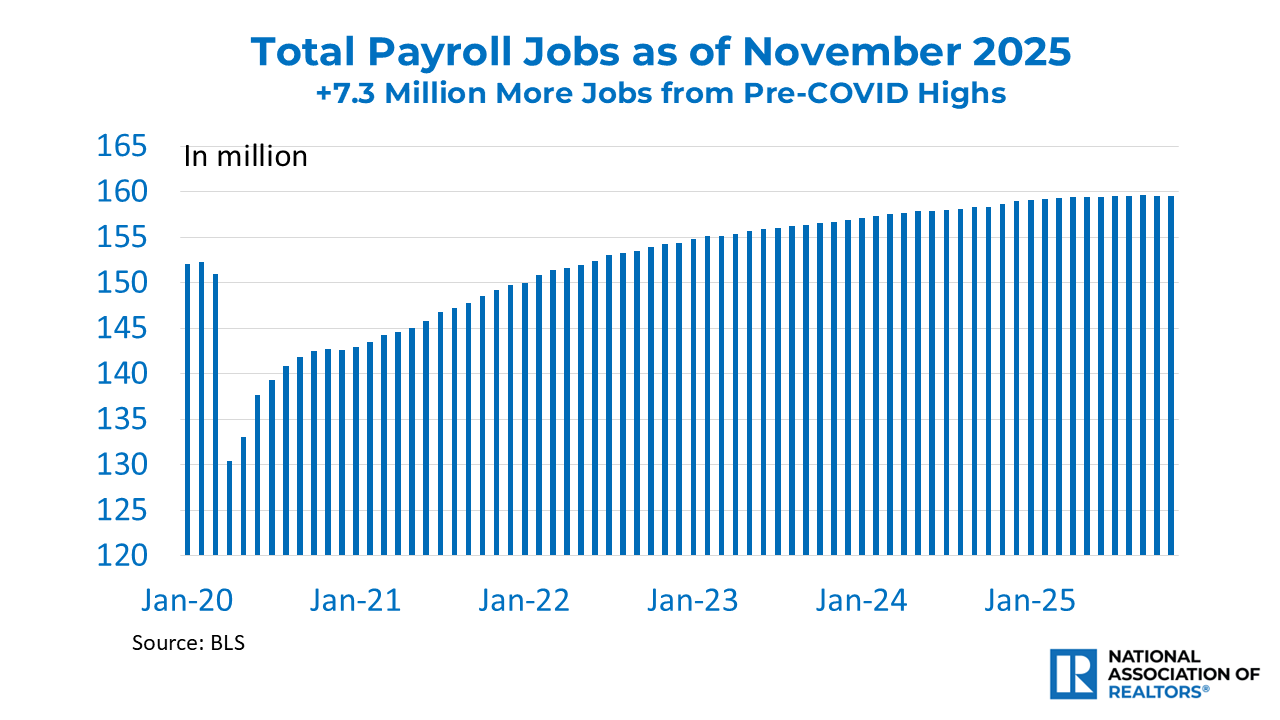
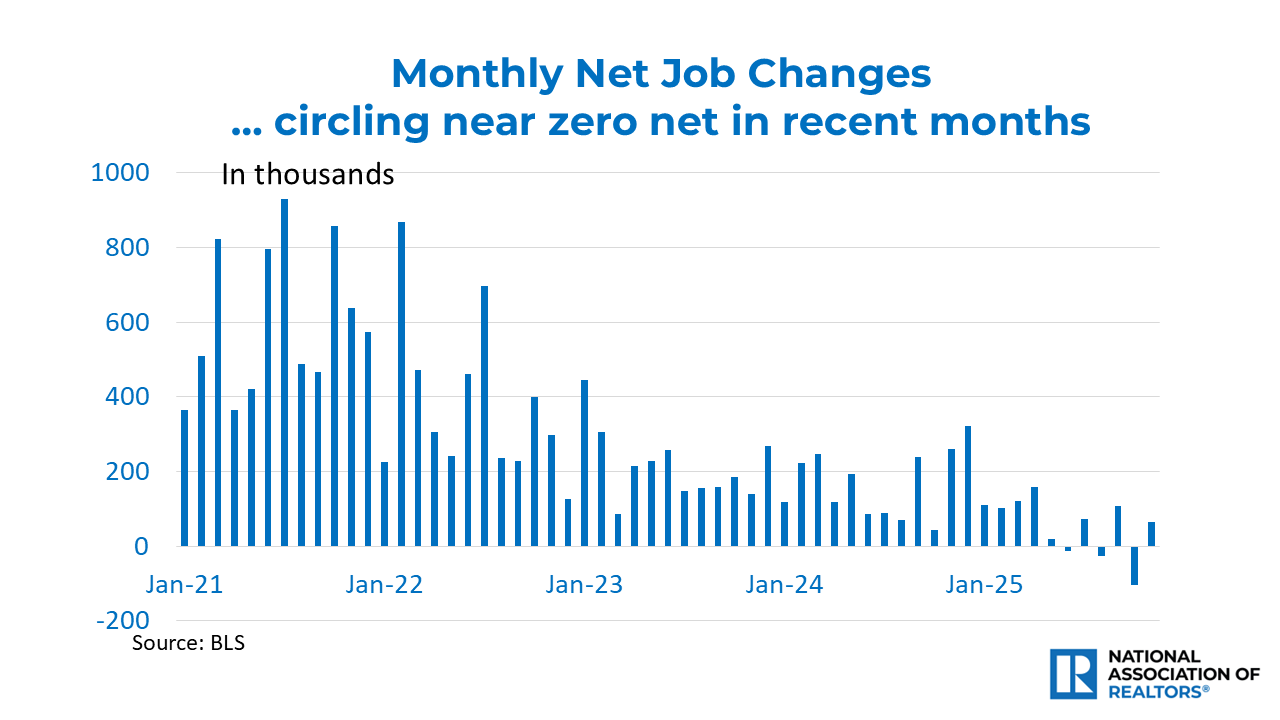
A net of 64,000 jobs were added to the total payroll tally in November, following 105,000 net losses in October. Total employment is now off-peak and about the same as in May 2025.
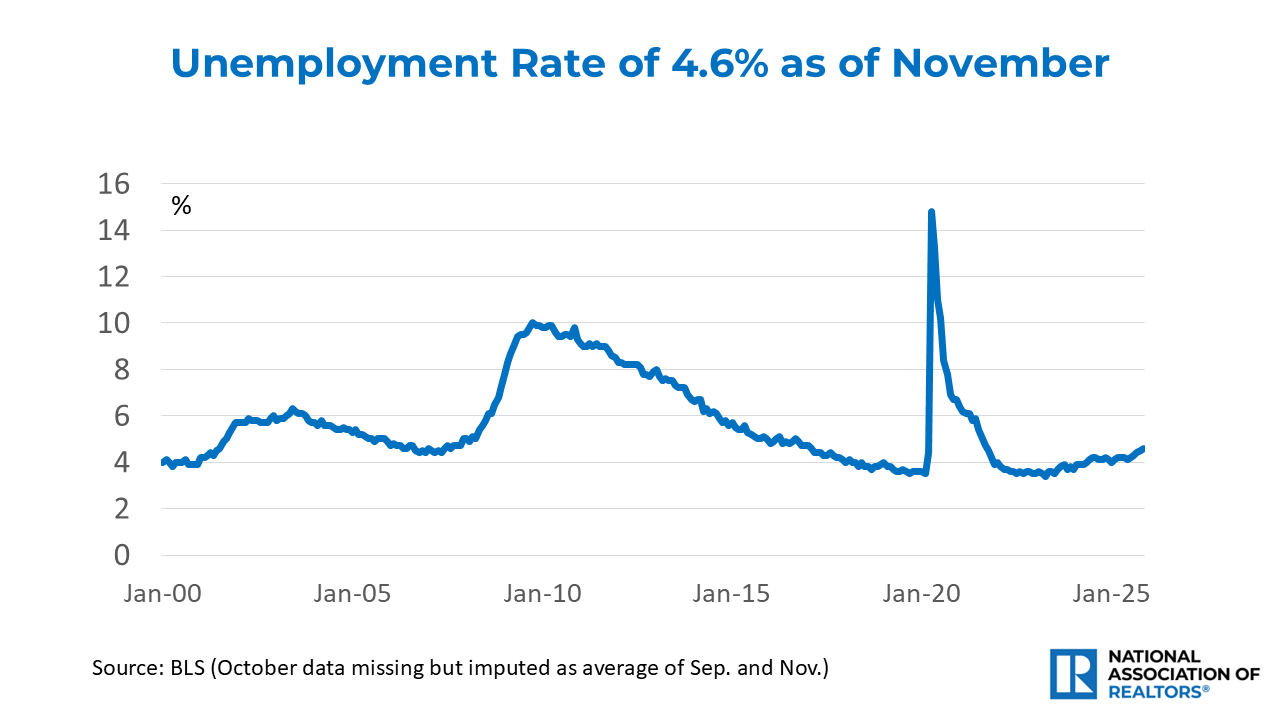
The unemployment rate climbed to 4.6% in November. That is the highest rate in five years. For comparison, the unemployment rate was 3.5% right before the COVID pandemic and was 10% during the 2008 Great Recession.
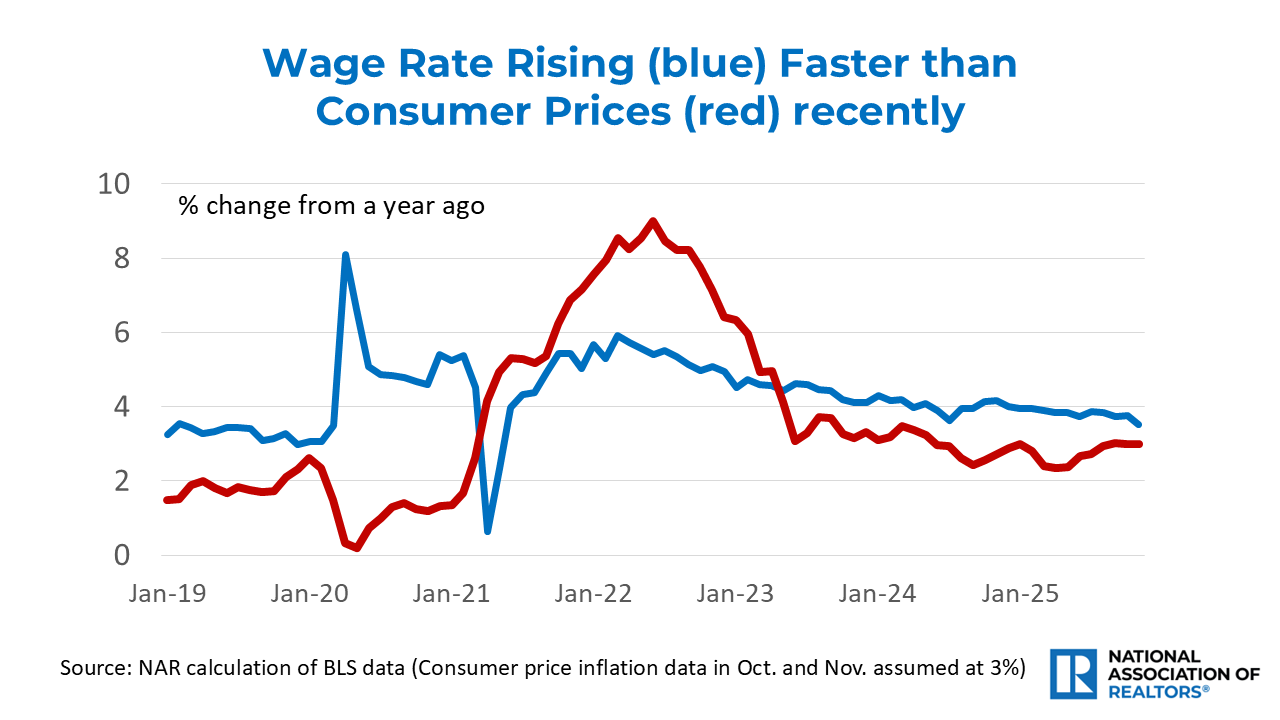
The latest wage growth rate of 3.5% would be slightly above consumer price inflation. The wage growth is also outpacing home price growth. A typical worker earned $36.86 per hour. Back before COVID, in 2019, in the same month, the hourly pay was $28.34. This cumulative 30% gain would be just a hair above the 29% consumer price rise over the same period. Essentially, this means no improvement in workers’ standard of living.
However, the big picture is that there are 7 million more jobs now than before the pandemic. Yet, home sales running at only 75% of pre-COVID normal levels clearly implies a sizable pent-up housing demand once mortgage rates decline meaningfully and more inventory shows up.
Advertisement

Lawrence Yun
Lawrence Yun is Chief Economist for the National Association of REALTORS®.