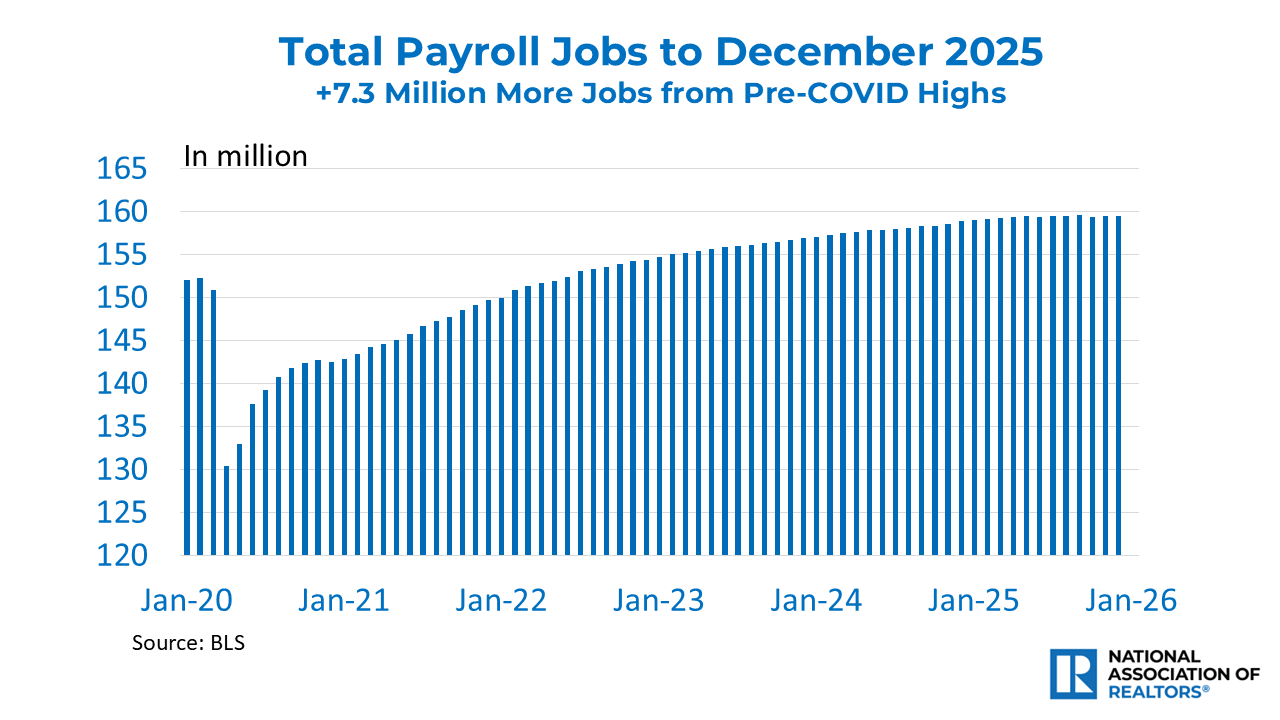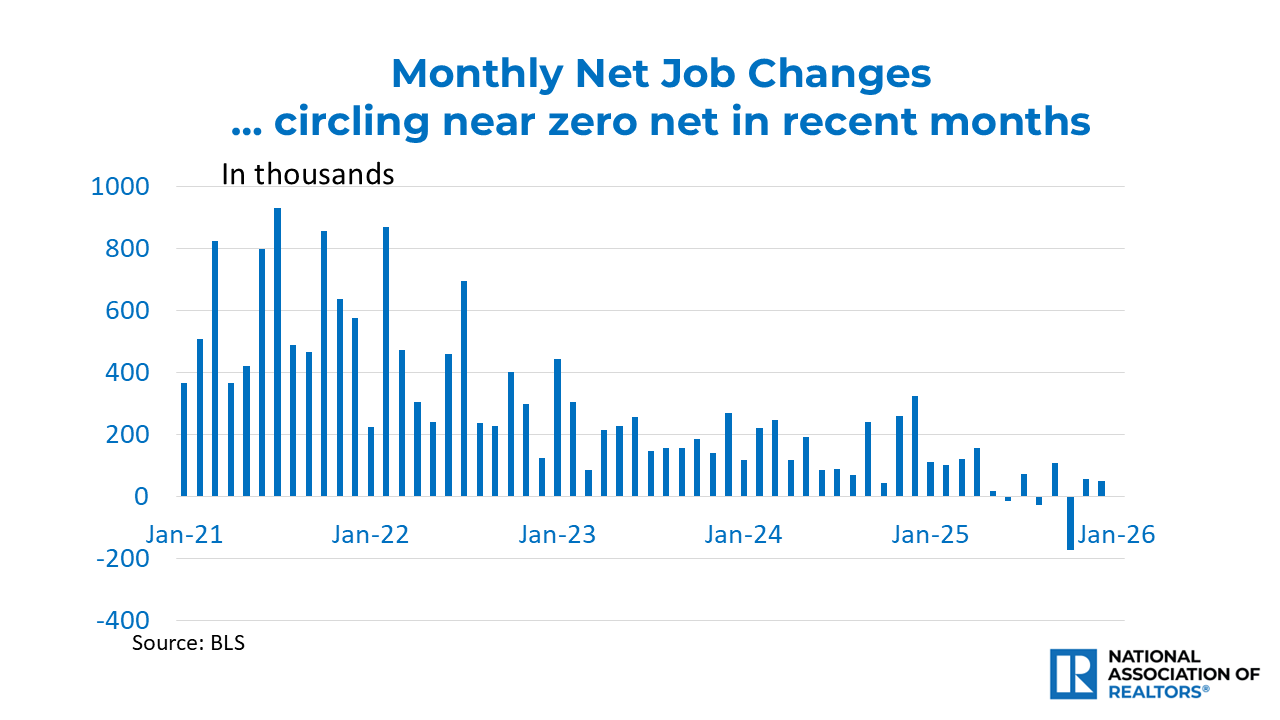









Job gains in 2025 were the weakest since 2010. However, with half a million net new job additions, we are not in a recession. In December, only 50,000 jobs were added to the payroll on net.
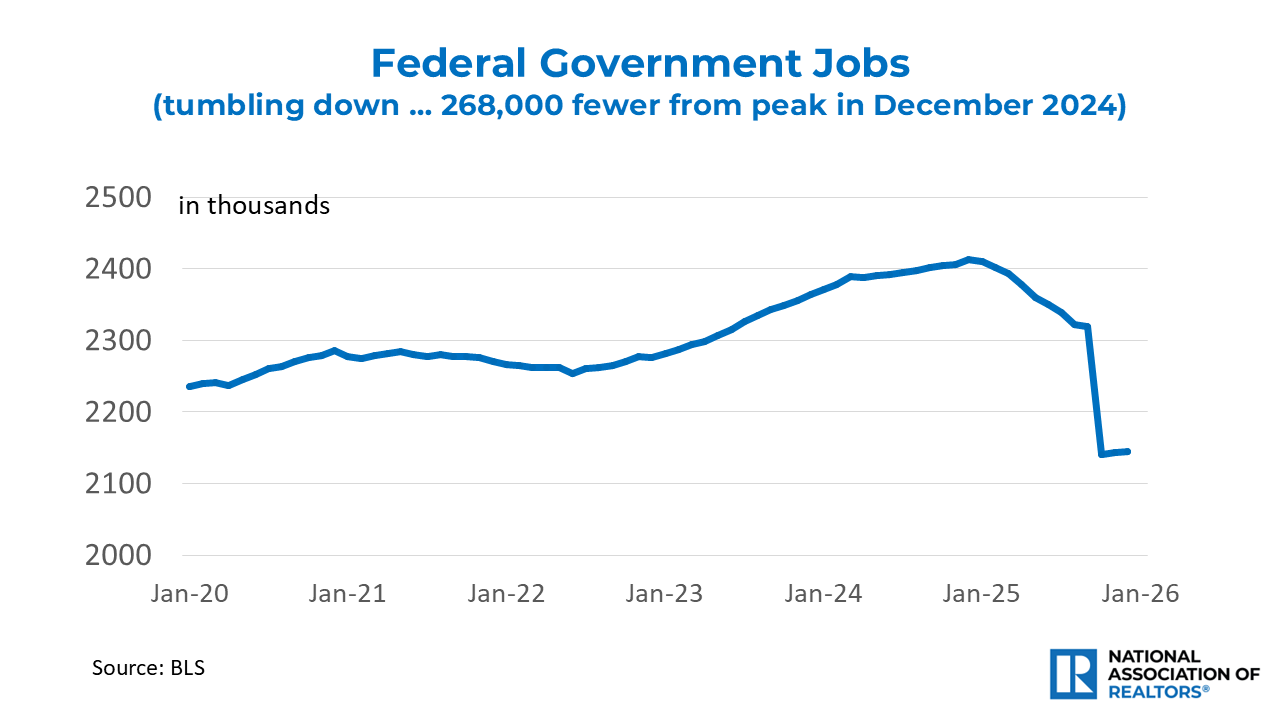
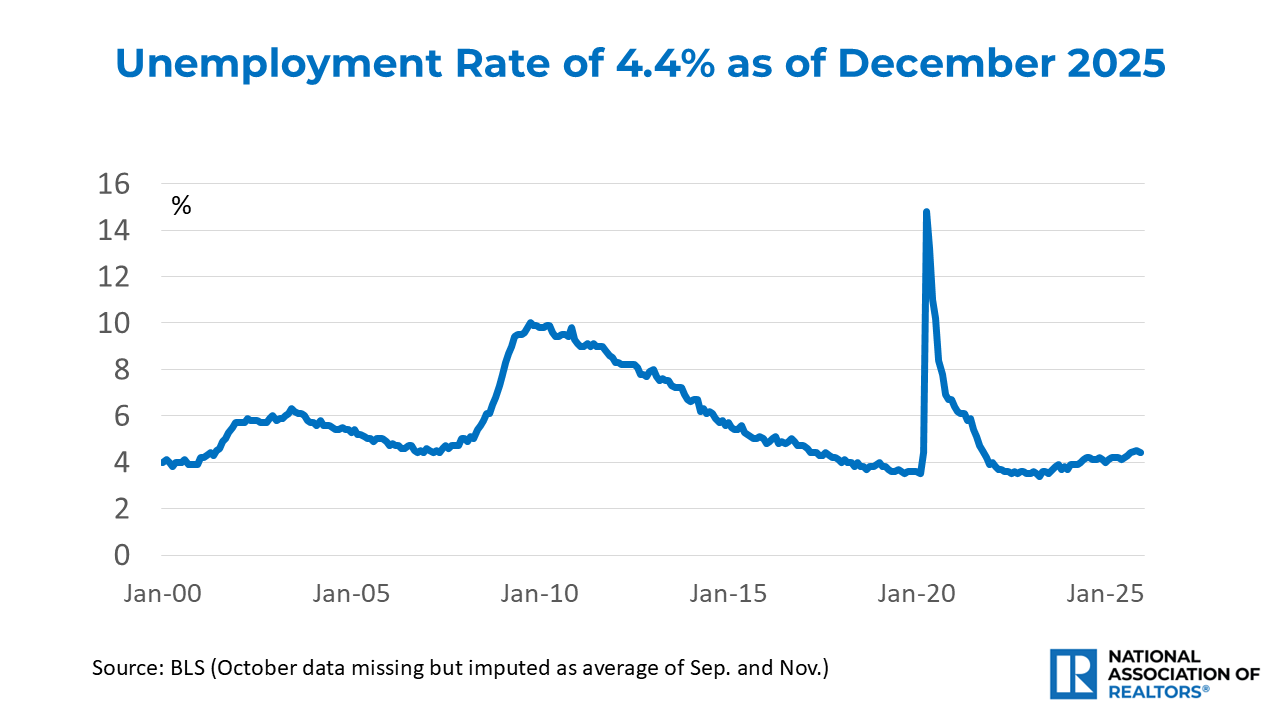
Part of the weakness comes from slashing federal employment by 268,000 over the past 12 months. Also, the southern border crossing is effectively shut down, so new paychecks appear to be going only to domestic residents and those with legal immigration status and legal work permits. That is why, despite the weaker job gains, the unemployment rate still remains relatively tight at 4.4%.
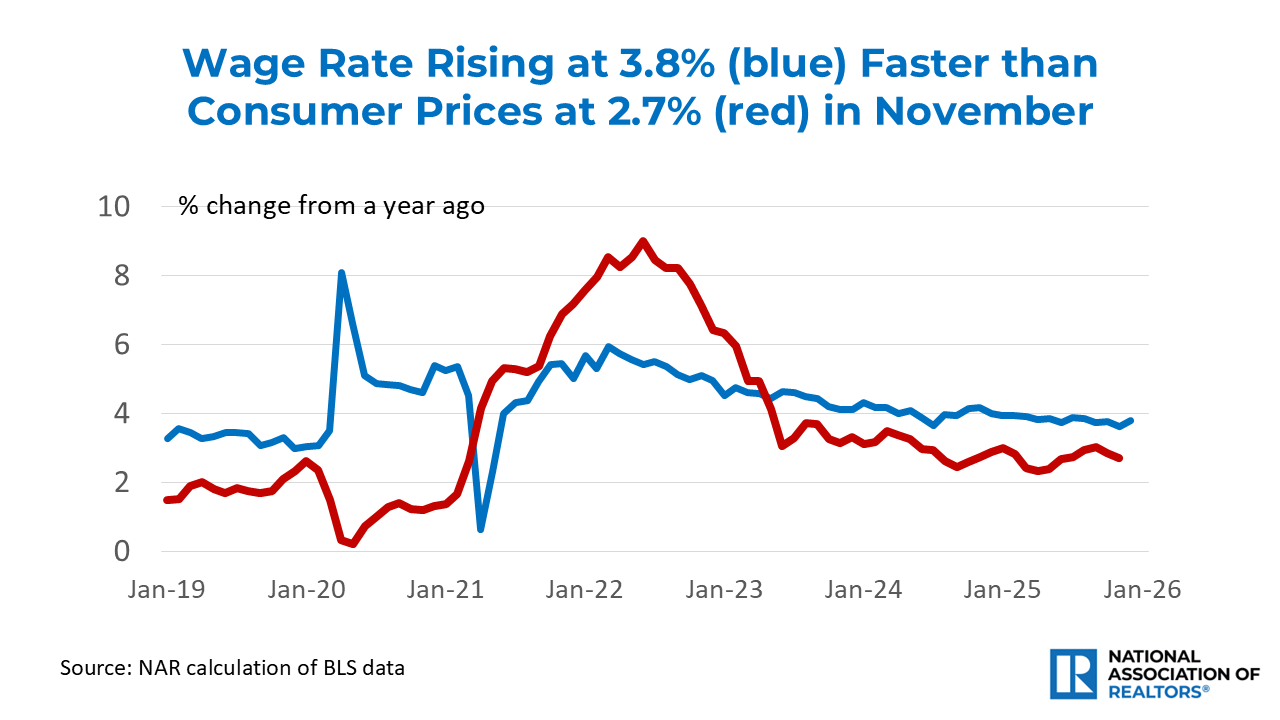
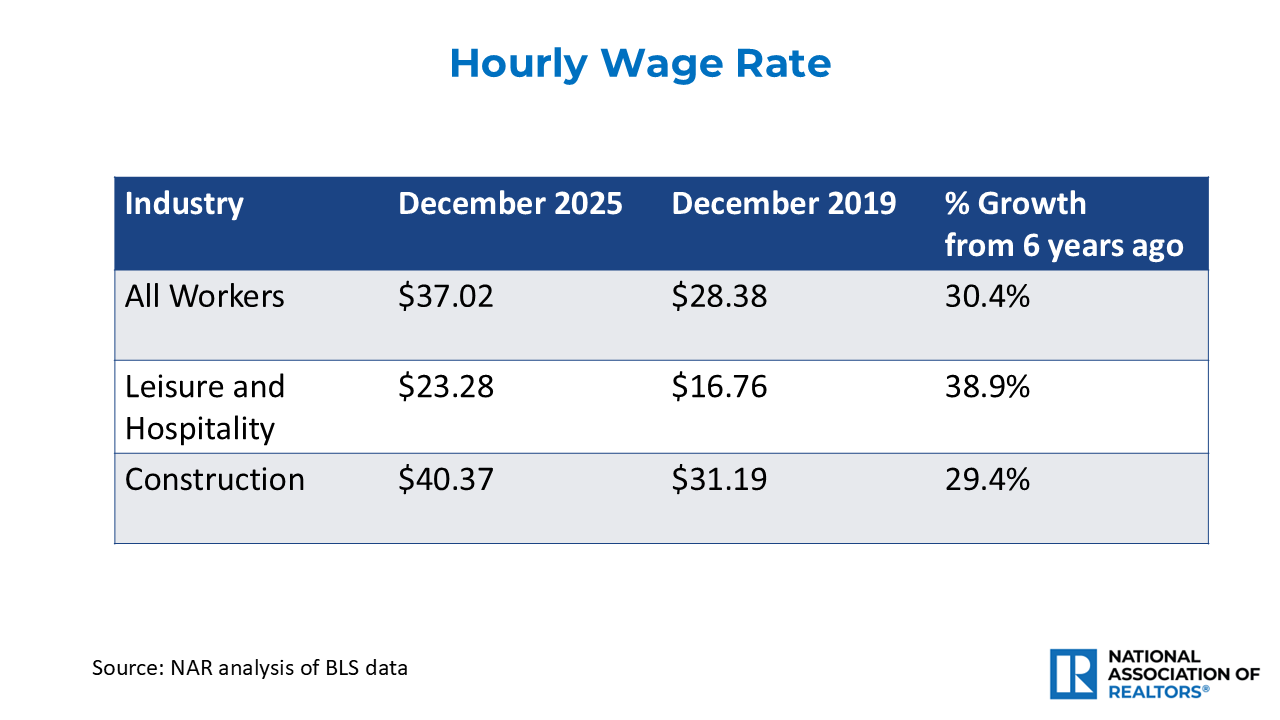
Wage growth is outpacing consumer price inflation by a small margin. It will be interesting to monitor wage growth in construction and leisure/hospitality (workers in restaurants and hotels, for example) in the coming months, since the southern border shutdown is more likely to affect these two sectors.
Overall, job growth is stalling but essentially at a record high. However, home sales are nowhere near a record high. Lower mortgage rates, faster income growth, and more housing supply will be needed to get home sales to move higher.