







In an era of rapid market shifts, regulatory pressures and emerging technologies, state and local REALTOR® associations are being challenged to redefine how they serve members.
Increasingly, the answer is not found in working alone, but in collaboration—specifically, in co-creating programs with the National Association of REALTORS® that address local priorities while drawing on national insight.
According to Nykea Pippion McGriff, vice president of association engagement at NAR, this collaborative approach was born directly from broker feedback.
“The goal behind NAR developing co-created programs with our state and local associations is simple: We want to bring the power, resources, and tools of the national organization directly to our members in the marketplaces they serve,” McGriff explains. “Brokers spoke to us very plainly and said that we needed to do a better job of bringing national resources into the marketplace.”
Three recent examples from different parts of the country—the West Michigan Lakeshore Association of REALTORS®, the North Carolina Association of REALTORS® and St. Louis REALTORS®—demonstrate how authentic partnerships with NAR can strengthen broker engagement, rebuild trust and deliver meaningful value.
Listening First in West Michigan
For WMLAR, the foundation of collaboration is listening. With 1,200 members across the region, the association holds regular town halls to ensure it stays connected to the challenges brokers face on the ground.
“We [want] to make sure we understand the quickly evolving environment they face,” says Jon Broadbooks, CEO of WMLAR. “One of our core values is listening to our members and reflecting their needs in how the association represents the West Michigan real estate industry.”
That philosophy recently shaped WMLAR’s October 2025 Town Hall, which took a more ambitious step by inviting NAR leaders to participate directly. The event featured McGriff and Ray Gronowski, vice president for market engagement at REALTORS® Property Resource.
Rather than a one-way presentation, the town hall became an open, two-way conversation about where the industry and NAR stand today.
“For us, the Town Hall provided an opportunity to hear the many steps NAR is taking to refocus its mission to serving its members,” Broadbooks explains. “The conversation included a candid appraisal of where the association had lost focus and, more importantly, showed how the association was re-imagining its role in a dynamic business landscape.”
That openness resonated strongly with WMLAR leadership. According to Dean Kreps, WMLAR’s 2026 president, the dialogue confirmed that local concerns were being taken seriously at the national level. “It was validating to learn the challenges we were seeing locally were very much on the radar for the national association,” Kreps says. “Issues don’t get resolved in a meaningful way without two-way communication.”
McGriff says this kind of interaction is exactly what co-creation is designed to accomplish.
“The true value of this approach is not only a clearer understanding of the three-way agreement, but also a practical, day-to-day understanding of how these resources, benefits and tools can meaningfully impact a broker’s business.”
Co-Creation at Scale in North Carolina
While WMLAR focused on dialogue, the North Carolina Association of REALTORS® took collaboration a step further by co-creating a full broker summit with NAR, specifically designed for the state’s market conditions.
“For our association, the co-created summit was a true partnership rather than a pre-packaged program,” says Andrea Bushnell, CEO of the North Carolina Association of REALTORS®. “We worked closely with NAR to shape the agenda around the specific needs, market realities and business pressures our brokers are facing.”
McGriff notes that this customization is core to the model. “Co-created programs are truly tailored to the local, regional or state association hosting them,” she says. “We begin with planning sessions where we review data specific to that market and talk through what brokers are experiencing in real time.”
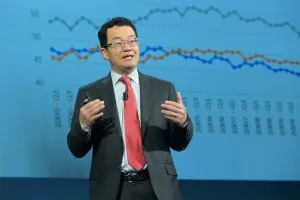
The agenda blended national expertise with local relevance, including an economic forecast by NAR Chief Economist Dr. Lawrence Yun and leadership insights from industry strategist Matthew Ferrara.
North Carolina’s decision to host the event virtually proved critical in making participation accessible. “We attracted more than 600 brokers,” Bushnell says.
McGriff points to strong momentum behind these efforts. “In 2025, we held 47 broker summits, and we already have approximately 30 scheduled for 2026,” she says. “Brokers are excited to learn about new tools and resources, and just as importantly, they value seeing the national organization show up in their local markets.”
Broker-Led Design in St. Louis
At St. Louis REALTORS®, co-creation took on an even more broker-driven form, with local leaders involved from the earliest stages of program design.
“Our broker summit was intentionally co-created with local broker-owners and senior leaders from the outset,” says Dan Sale, chief executive officer of St. Louis REALTORS®. “Rather than designing a traditional association-led program, we engaged brokers early to help shape the agenda, identify the most pressing issues and determine the right format.”
The result was a half-day summit “built around candid discussion, peer-to-peer learning and practical takeaways—less presentation, more conversation,” Sale says. “NAR’s involvement added national context and credibility, while still allowing the content to remain grounded in local market realities.”
Overwhelmingly positive feedback from brokers confirmed the value of this approach. “Brokers appreciated that the summit respected their time, addressed real operational and strategic challenges, and gave them space to speak openly with peers,” Sale says.
The long-term benefit of co-created summits is alignment. “Co-creating these summits reinforces that local associations, NAR and brokers are partners—not separate silos—working toward shared outcomes,” he says.

A Strong Value Proposition
Across all three associations, the deeper impact of co-creation goes beyond attendance numbers and is reshaping how brokers view the role of organized real estate.
“For broker-owners, the value is tangible and immediate,” McGriff says. “These programs increase awareness of resources that can help reduce expenses, mitigate risk and support their ability to get to the next transaction.”
Looking ahead, NAR is expanding collaboration even further. “In 2026, we’ll be partnering with four to five new states,” McGriff says. “We’re also seeing local associations choose to partner across regions. That’s when we truly win—when we focus on what we have in common, rather than what divides us.”
For McGriff, the work is deeply personal. “As [a real estate pro who is a] REALTOR® for the past 22 years, I truly believe this is a unique moment for our industry,” she says. “This is our time. This is our industry. And the opportunity to make a meaningful, lasting impact is now.”
Sale echoes that sentiment with a practical call to action. “I would encourage other associations to view broker engagement as an ongoing relationship, not a single event,” he says. “Co-created summits work best when they’re part of a broader strategy to listen to brokers, respond to their needs, and involve them meaningfully in shaping the future of the organization and the industry.”
Whether through town halls, summits or other co-created programs, associations that invite NAR into real conversations—and real planning—can unlock significant value for their members. Now is the time to ask: What could your association build with NAR that truly reflects your market, your brokers and your members’ needs?