









The U.S. economy continued to grow in June, but at a slower pace. Job creation moderated, inflation eased, and the labor market remained resilient with unemployment near historic lows. At the same time, interest rates stayed elevated as the Federal Reserve left policy unchanged, keeping financing costs high for commercial real estate. The result is a mixed economic environment that continues to support demand for commercial properties in many markets while making new investment and development decisions more challenging in others.
Below is a summary of the performance of each major commercial real estate sector in June of 2026.
Office Properties
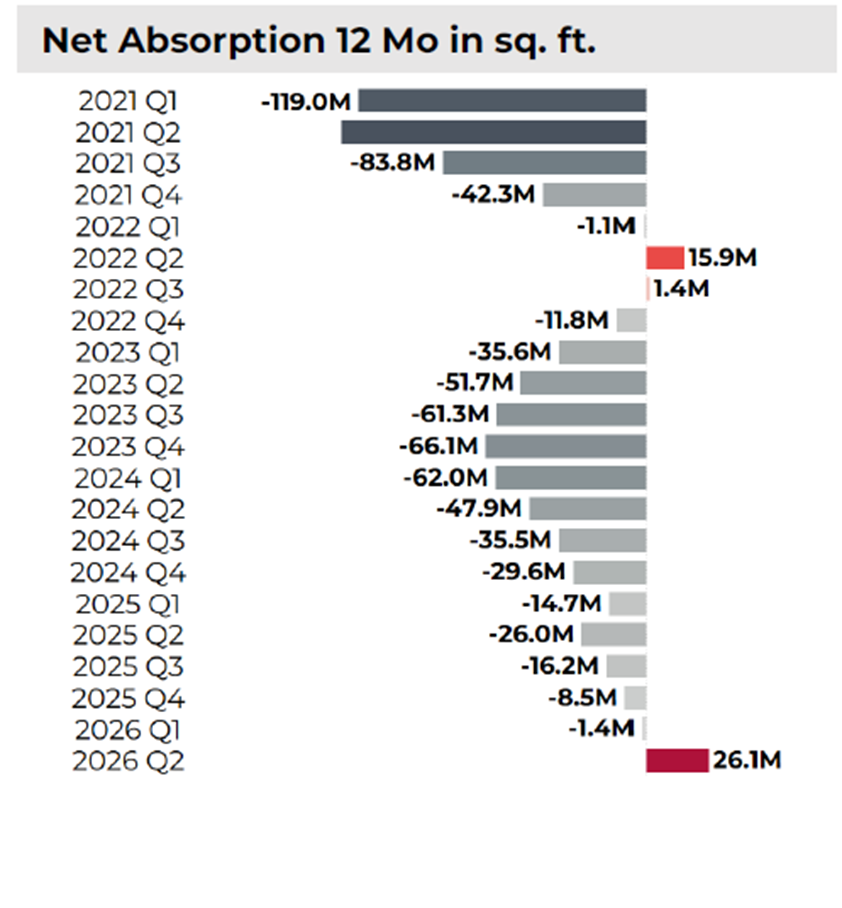
The office market moved into a more constructive phase in Q2, with annual demand turning positive after nearly four years of occupancy losses. Stronger absorption helped reduce vacancy and supported firmer rent growth, though the sector remains early in its adjustment and availability is still elevated. Class A continued to lead leasing, Class B posted its first quarterly gain in 4.5 years but remained negative on an annual basis, and Class C losses narrowed while tenant move-outs persisted.
Multifamily Properties
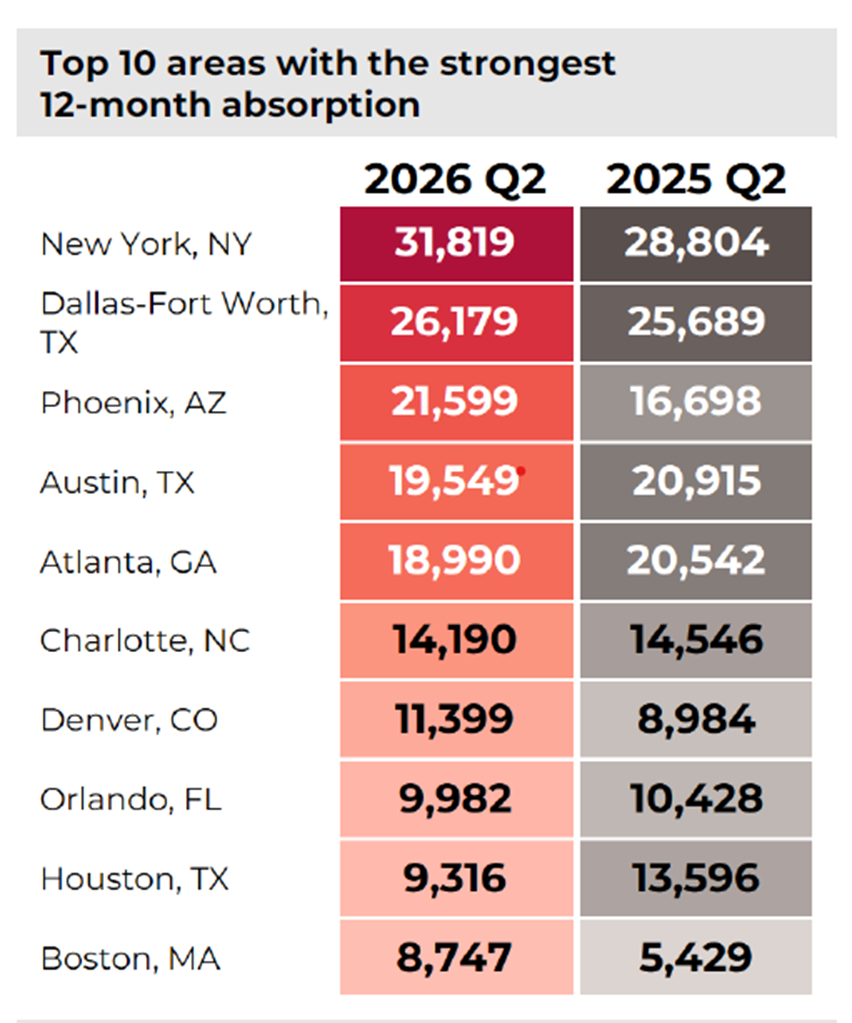
The multifamily market remained resilient in June, with demand still above long-term norms despite moderating from last year. Slower deliveries narrowed the supply-demand gap, helping vacancy edge lower and rent growth improve modestly, though excess inventory continued to constrain pricing power. Class A showed the clearest stabilization, Class B fundamentals remained softer but improved, and Class C retained the lowest vacancy and strongest rent growth despite continued move-outs.
Retail Properties
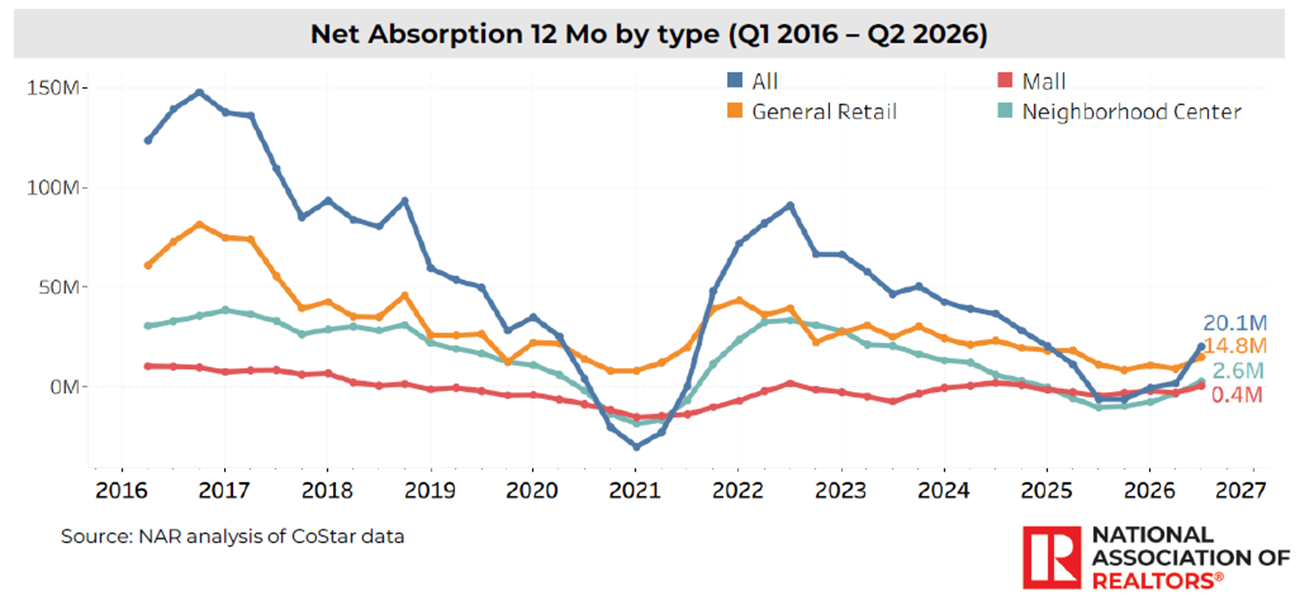
The retail sector remained comparatively resilient in June, with stronger absorption signaling broader improvement across property formats. Continued deliveries and limited inventory removal placed modest upward pressure on vacancy, while rent growth moderated but still outpaced other major property types. General retail continued to lead demand and maintained the lowest vacancy, while Neighborhood Centers, Malls, and Power Centers all returned to positive absorption.
Industrial Properties
The industrial market continued to rebalance in June, with demand improving substantially and the supply-demand gap narrowing as the sector worked through excess inventory. Completions still exceeded leasing, keeping vacancy elevated and rent growth restrained despite stronger absorption. Logistics remained the primary source of demand, specialized facilities showed selective strength, and flex continued to underperform with ongoing tenant move-outs.
Hotel Properties
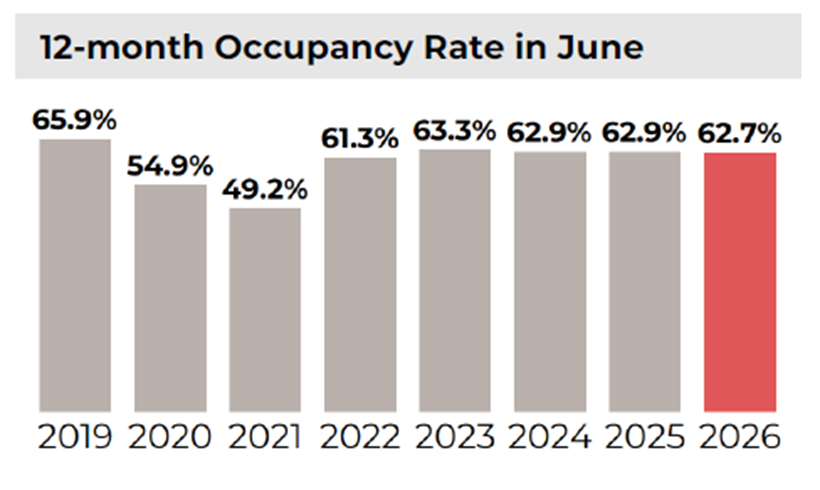
Hospitality conditions remained broadly stable in June, though occupancy continued to lag pre-pandemic benchmarks as remote work and softer corporate travel weighed on business-oriented markets. ADR and RevPAR remained well above 2019 levels, supporting operating performance despite weaker occupancy. Investment activity stayed limited as elevated financing costs and economic uncertainty continued to restrain investor demand.